Hoppa till huvudinnehåll
Debatt

Debatt: Hemmajobb får inte reduceras till känslor

REPLIK. Arbetsplatsfrågan behöver handla om värdeskapande, inte om var någon råkar sitta, skriver Oscar Berg.
Publicerad
En katt som ligger på en dator
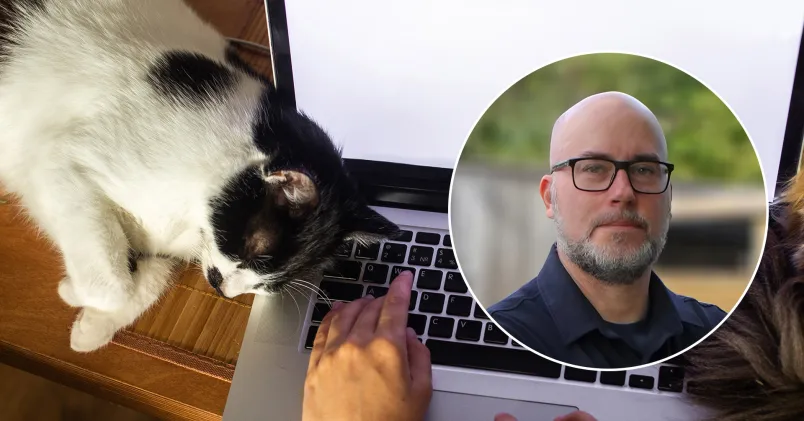
Det är mycket känslor och åsikter inblandade när hybrid- och hemmajobb diskuteras. Det är dags att prata om vad som skapar värde på en arbetsplats. Foto: Colourbox/privat
Kollega Debatt  Det här är en text med syfte att påverka. Åsikterna som uttrycks är skribentens egna.

Detta är en replik på Sohaila Bagger-Sjöbäcks debattext från 11/11 "Jobba hemma är ingen rättighet"

Jag har länge varit aktiv i debatten kring distansarbete och sett samma mönster återkomma: debatten drivs av känslor, normer och föreställningar om ”rätt sätt att arbeta”, inte av verksamhetens faktiska logik. I nästan varje diskussion reduceras frågan till kultur, ledarstil eller personlig preferens. 

Min kollega Henrik Gustafsson och jag har sedan pandemin genomfört en årlig undersökning om hybridarbete i Sverige. I den senaste undersökningen från våren 2025 såg vi en tydlig trend i form av ett ökat gap mellan arbetsgivare och arbetstagare i synen på arbetsplatsen och vilken arbetsplatsmodell som har bäst förutsättningar. 

Den mognadsanalys som vi gör baserat på de svar vi får i undersökningen visar också att organisationer över lag blivit mer reaktiva och mindre strategiska i sin syn på hybridarbetet och möjligheterna till platsoberoende arbete. 

Behovet av fysisk närvaro behöver motiveras av värde, inte av personliga åsikter.

Det är i förlängningen potentiellt förödande för en organisation att låta sig styras av personligt tyckande. Jag menar att den i stället bör styras av realiteter som hur omvärlden ser ut och vilka möjligheter det finns att få tillgång till de bästa resurserna och använda dem så smart och hållbart som möjligt.

Den centrala frågan är egentligen väldigt enkel: Var och hur organiserar vi arbetet så att verksamheten får högsta möjliga avkastning på sitt humankapital?

Behovet av fysisk närvaro behöver motiveras av värde, inte av gammal vana eller personliga åsikter. Kontoret behöver ses som ett verktyg i stället för som en norm. Att mötas fysiskt på samma plats bör ses som ett medel att ta till när det skapar värde, inte ett mål i sig.

Diskussionen behöver handla om hur vi organiserar arbetet

En verksamhet som utgår från ett värdebaserat perspektiv får bättre tillgång till kompetens, lägre kostnader och snabbare genomförande. För medarbetarna innebär det samtidigt tydligare uppdrag, större flexibilitet och bättre förutsättningar att prestera.

Samtidigt försvinner motsättningen mellan ”hemma” och ”kontor”. 

För att hjälpa fler organisationer att komma dit behöver vi som deltar i denna diskussion sluta att föra den på en nivå där vi får det som att framstå att valet handlar om att arbeta hemifrån eller kontoret. Vi behöver lyfta den ett par nivåer upp till att handla om hur vi organiserar arbetet för att skapa maximalt värde och vilka förändringar som detta kräver. 

/Oscar Berg, digitaliseringsexpert

Bläddra i senaste numret av våra e-tidningar

Bläddra i senaste numret av Kollega

Till Kollegas e-tidning

Bläddra i senaste Chef & Karriär

Till Chef & Karriärs e-tidning
Debatt

Debatt: Remote work is worth being bargained for

Companies who offered hybrid or remote work are taking steps to return their workforce to the office. I believe Swedish unions must work to protect remote members’ rights and avoid the unnecessary upheaval of their lives, writes software engineer Clément Pirelli.
Publicerad 16 december 2025, kl 09:15
Remote work Clément Pirelli,  Software Engineer at EA Frostbite
A return to the office has dire consequences for remote or hybrid employees, writes software engineer Clément Pirelli. Foto: Colourbox/privat
Kollega Debatt  Det här är en text med syfte att påverka. Åsikterna som uttrycks är skribentens egna.

While remote work is not a new phenomenon, the COVID-19 pandemic proved the efficacy of the remote model on a large scale by forcing most white-collar businesses to switch to working remotely. 

Since then, employees have begun building their lives around this new norm; some of course chose to return to the office when the pandemic ended, if only part time (so-called hybrid work), but many chose to continue working remotely, which cemented remote working as a legitimate and systematically applied work model in many industries.

Recently however, a majority of companies who offered hybrid or remote work are taking steps to return their workforce to the office. These changes are often mandated by decision-making bodies outside of Sweden, lack scientific or evidence-based justification, and are unilaterally determined.

Workers are now forced to move or commute for hours a day

Employers often describe remote working as a benefit which can be given and taken away at will, but a change of work model has serious consequences for remote workers’ daily life: even if they were hired as a remote employee, they are now forced to move or commute for hours a day to a distant office where, in the cases of distributed or international companies, their colleagues might not even be located. 

If their company has offices in other countries, they’re either forced to stay to take part in meetings in other timezones, or allowed to take the meeting… at home, remotely! They now face difficulties managing childcare, pets and other caretaking responsibilities; their work and daily life conflict.

Employers spend enormous amounts on office space many employees don’t even want to work in

But employees are not the only ones negatively affected by the change: employers are also worse off. They spend enormous amounts on office space many employees don’t even want to work in, and thus become less attractive for new recruits, both Swedish and international. 

Some believe we should go back to the office because outsourcing is then less of a problem, but this argument simply doesn’t hold up to scrutiny, at least not for the tech industry: Sweden has 250’000 tech employees according to TechSverige, and many are top talent who moved here in search of better working conditions. Sweden’s workforce is competitive globally, and it’s exactly the Swedish model which made this happen.

But we have to maintain the excellent working conditions Sweden is known for if this is to continue, and this can no longer be done without discussing remote working. It’s clear the question must be negotiated, not just between unions and employer organisations, but also locally between companies and their clubs

/Clément Pirelli, software engineer at EA Frostbite