Hoppa till huvudinnehåll
Debatt

Debatt: Förbättra inomhusmiljön på jobbet

Vi tillbringar stor del av vår arbetsdag inomhus. Då är det oroande att få är nöjda med miljön på kontoret, skriver Andreas Wallin och Catarina Warfvinge.
Publicerad
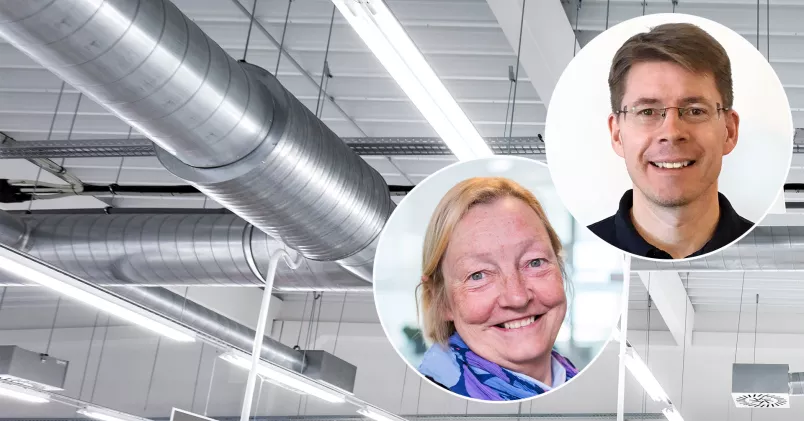
Rör i taket, Catarina Warfvinge och Andreas Wallin
Ventilation är en av de saker som anställda stör sig mest på i kontorsmiljön, skriver Catarina Warfvinge och Andreas Wallin. Foto: Shutterstock
Kollega Debatt  Det här är en text med syfte att påverka. Åsikterna som uttrycks är skribentens egna.

I dagens samhälle tillbringar vi mer tid inomhus än någonsin tidigare och arbetsplatser är inget undantag. Med tanke på detta är det djupt oroande att en nyligen genomförd undersökning av oss visar att endast en av tre personer är nöjd med inomhusmiljön på jobbet. 

Detta borde vara en väckarklocka för landets arbetsgivare då det är vetenskapligt bevisat att inomhusmiljön påverkar både vår produktivitet och vårt välbefinnande. 

Resultaten från undersökningen är anmärkningsvärda, men tyvärr inte särskilt förvånande. Vi genomför återkommande enkäter där anställda får uttrycka sina åsikter om inomhusklimatet på sin arbetsplats och vi får då ofta liknande svar.

Medarbetare som lyfter problem betraktas som gnälliga 

Allra mest oroväckande är att många arbetsgivare inte verkar ta hänsyn till den här typen av problem. 28 procent av de tillfrågade anser att arbetsgivaren i liten utsträckning bryr sig om inomhusklimatet. Medarbetare som lyfter problemen tenderar att betraktas som "känsliga" eller "gnälliga". 

Det är oacceptabelt. Som arbetsgivare är man skyldig att bedriva systematiskt arbetsmiljöarbete och säkerställa en god inomhusmiljö för de anställda. Det gör man bland annat genom undersökningar, genom att uppdatera och justera sina system regelbundet och genom vara noga med service och underhåll. 

Ventilationen är ofta problemet

Enligt undersökningen är det oftast ventilationen som är problemet. Nästan hälften av de som upplever dålig inomhusmiljö på arbetsplatsen anger bristfällig eller otillräcklig ventilation som orsak. Det är ett konkret problem som ofta är enkelt att åtgärda. Ett tips till landets företagare är att ta del av fastighetsägarens OVK-protokoll för att på så sätt uppfylla sitt krav på kontroll enligt förskrift.

Det är nu dags att vi alla tar vårt ansvar för att förbättra inomhusmiljön på landets arbetsplatser. Det är en investering i hälsa och välmående som kommer att gynna både företag och personal på lång sikt. Tillsammans kan vi skapa en bättre arbetsmiljö för alla.

Catarina Warfvinge, universitetslektor på Lunds Tekniska Högskola, Andreas Wallin, energispecialist på GK Sverige. 

Bläddra i senaste numret av våra e-tidningar

Bläddra i senaste numret av Kollega

Till Kollegas e-tidning

Bläddra i senaste Chef & Karriär

Till Chef & Karriärs e-tidning
Debatt

Debatt: Remote work is worth being bargained for

Companies who offered hybrid or remote work are taking steps to return their workforce to the office. I believe Swedish unions must work to protect remote members’ rights and avoid the unnecessary upheaval of their lives, writes software engineer Clément Pirelli.
Publicerad 16 december 2025, kl 09:15
Remote work Clément Pirelli,  Software Engineer at EA Frostbite
A return to the office has dire consequences for remote or hybrid employees, writes software engineer Clément Pirelli. Foto: Colourbox/privat
Kollega Debatt  Det här är en text med syfte att påverka. Åsikterna som uttrycks är skribentens egna.

While remote work is not a new phenomenon, the COVID-19 pandemic proved the efficacy of the remote model on a large scale by forcing most white-collar businesses to switch to working remotely. 

Since then, employees have begun building their lives around this new norm; some of course chose to return to the office when the pandemic ended, if only part time (so-called hybrid work), but many chose to continue working remotely, which cemented remote working as a legitimate and systematically applied work model in many industries.

Recently however, a majority of companies who offered hybrid or remote work are taking steps to return their workforce to the office. These changes are often mandated by decision-making bodies outside of Sweden, lack scientific or evidence-based justification, and are unilaterally determined.

Workers are now forced to move or commute for hours a day

Employers often describe remote working as a benefit which can be given and taken away at will, but a change of work model has serious consequences for remote workers’ daily life: even if they were hired as a remote employee, they are now forced to move or commute for hours a day to a distant office where, in the cases of distributed or international companies, their colleagues might not even be located. 

If their company has offices in other countries, they’re either forced to stay to take part in meetings in other timezones, or allowed to take the meeting… at home, remotely! They now face difficulties managing childcare, pets and other caretaking responsibilities; their work and daily life conflict.

Employers spend enormous amounts on office space many employees don’t even want to work in

But employees are not the only ones negatively affected by the change: employers are also worse off. They spend enormous amounts on office space many employees don’t even want to work in, and thus become less attractive for new recruits, both Swedish and international. 

Some believe we should go back to the office because outsourcing is then less of a problem, but this argument simply doesn’t hold up to scrutiny, at least not for the tech industry: Sweden has 250’000 tech employees according to TechSverige, and many are top talent who moved here in search of better working conditions. Sweden’s workforce is competitive globally, and it’s exactly the Swedish model which made this happen.

But we have to maintain the excellent working conditions Sweden is known for if this is to continue, and this can no longer be done without discussing remote working. It’s clear the question must be negotiated, not just between unions and employer organisations, but also locally between companies and their clubs

/Clément Pirelli, software engineer at EA Frostbite