Hoppa till huvudinnehåll
Debatt

Debatt: Glöm inte människan bakom skärmen

Bra ledarskap bygger på närvaro. Men i coronatider blir det svårare att visa omtanke och stöttning på distans. Ring varandra i stället för att mejla och glöm inte att även fråga hur chefen mår ibland, skriver ledarskapsutvecklaren Eduard von Busch.
Publicerad
Jessica Gow/TT
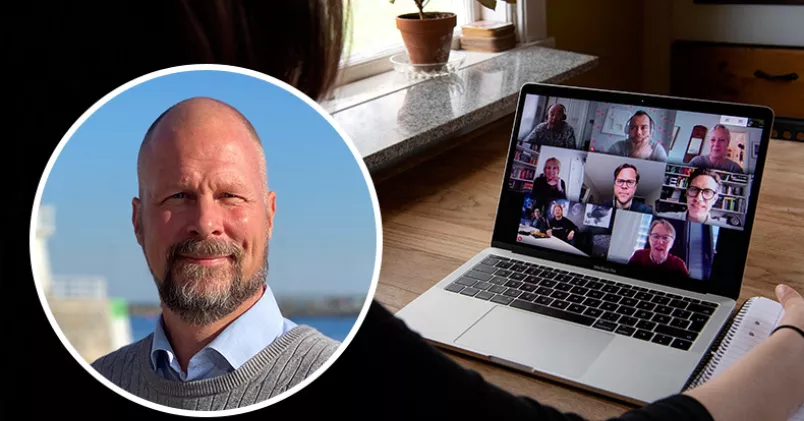
Vi måste hitta lösningar för att känna närvaro med varandra igen, trots att vi stirrar in i en datorskärm, skriver ledarskapsutvecklaren Eduard von Busch. Jessica Gow/TT
Kollega Debatt  Det här är en text med syfte att påverka. Åsikterna som uttrycks är skribentens egna.

Nu i dessa covidtider är det än viktigare med ett ledarskap byggt på närvaro. Men egentligen är detta lite felformulerat, då ledarskap uppstår just genom närvaro. Men denna abrovink sätts på sin spets då vi tidigare har förväxlat fysisk och psykisk närvaro.

Vi har haft en övertro på betydelsen av att vara fysiskt närvarande på ett kontor, vid ett skrivbord, i ett möte (eftersom vi inte har varit selektiva med vilka och varför vi har möten). Det gäller såväl ledarskap som effektivitet och resultat. 

Det senare visas tydligt i en rad mätningar. Bland annat en från Microsoft, där det inte var produktiviteten som rasade, utan innovationsgraden som sjönk genom vår frånvaro av närhet till varandra i dessa tider.

I början av chefskapet är det likhetstecken mellan fysisk och psykisk närvaro, men i senare skeden är det den psykiska som är avgörande. Före pandemin var det inte sällan så att vi satt fysiskt vid våra platser eller i ett mötesrum, men det var allt som oftast så att vi inte var helt mentalt närvarande. Således uppstår inte heller ledarskap som det borde utan vi fastnar i att chefer just förblir chefer och att förtroende och tillit inte får uppstå och utvecklas och i sin tur skapa ledarskap.

När vi nu jobbar på distans behöver vi finna lösningar för att återknyta till den psykiska närvaron:

  • Att vi oftare checkar in med varandra - genom så kallade buddy checks.
  • Att vi ringer och inte alltid mailar till varandra.
  • Att vi frågar oss själva när vi hörde av oss till varandra senast samt i synnerhet vem vi inte har varit i kontakt med på sistone.
  • Att du även frågar din chef hur det är med denne – vi är alla bara människor även chefer.
  • Att inte förlita dig på att alla läser all information som sänds ut i massutskick, utan stämma av med enskilda hur de har tagit emot eller inte tagit emot.
  • Att du tänker på att ditt informationsutflöde blir någon annans distraktionsinflöde – det vill säga förpacka information och sänd inte ut enstaka mail efter hand.
  • Att du tänker över hur organisationsstrukturen medger eller stjälper informations- och delgivningsstrukturer. Vem skickar du vilken info till – alla får allt eller vissa får visst – skilj på "bra att ha"- och "måste ha" information.

/Eduard von Busch, Partner på Management Partners

Vill du skriva för Kollega debatt?

Kontakt:  
lina.bjork@kollega.se  eller niklas.hallstedt@kollega.se

Läs mer: Så skriver du för Kollega Debatt
Bläddra i senaste numret av våra e-tidningar

Bläddra i senaste numret av Kollega

Till Kollegas e-tidning

Bläddra i senaste Chef & Karriär

Till Chef & Karriärs e-tidning
Debatt

Debatt: Remote work is worth being bargained for

Companies who offered hybrid or remote work are taking steps to return their workforce to the office. I believe Swedish unions must work to protect remote members’ rights and avoid the unnecessary upheaval of their lives, writes software engineer Clément Pirelli.
Publicerad 16 december 2025, kl 09:15
Remote work Clément Pirelli,  Software Engineer at EA Frostbite
A return to the office has dire consequences for remote or hybrid employees, writes software engineer Clément Pirelli. Foto: Colourbox/privat
Kollega Debatt  Det här är en text med syfte att påverka. Åsikterna som uttrycks är skribentens egna.

While remote work is not a new phenomenon, the COVID-19 pandemic proved the efficacy of the remote model on a large scale by forcing most white-collar businesses to switch to working remotely. 

Since then, employees have begun building their lives around this new norm; some of course chose to return to the office when the pandemic ended, if only part time (so-called hybrid work), but many chose to continue working remotely, which cemented remote working as a legitimate and systematically applied work model in many industries.

Recently however, a majority of companies who offered hybrid or remote work are taking steps to return their workforce to the office. These changes are often mandated by decision-making bodies outside of Sweden, lack scientific or evidence-based justification, and are unilaterally determined.

Workers are now forced to move or commute for hours a day

Employers often describe remote working as a benefit which can be given and taken away at will, but a change of work model has serious consequences for remote workers’ daily life: even if they were hired as a remote employee, they are now forced to move or commute for hours a day to a distant office where, in the cases of distributed or international companies, their colleagues might not even be located. 

If their company has offices in other countries, they’re either forced to stay to take part in meetings in other timezones, or allowed to take the meeting… at home, remotely! They now face difficulties managing childcare, pets and other caretaking responsibilities; their work and daily life conflict.

Employers spend enormous amounts on office space many employees don’t even want to work in

But employees are not the only ones negatively affected by the change: employers are also worse off. They spend enormous amounts on office space many employees don’t even want to work in, and thus become less attractive for new recruits, both Swedish and international. 

Some believe we should go back to the office because outsourcing is then less of a problem, but this argument simply doesn’t hold up to scrutiny, at least not for the tech industry: Sweden has 250’000 tech employees according to TechSverige, and many are top talent who moved here in search of better working conditions. Sweden’s workforce is competitive globally, and it’s exactly the Swedish model which made this happen.

But we have to maintain the excellent working conditions Sweden is known for if this is to continue, and this can no longer be done without discussing remote working. It’s clear the question must be negotiated, not just between unions and employer organisations, but also locally between companies and their clubs

/Clément Pirelli, software engineer at EA Frostbite